
Genesis: Group show (with works by Flavie Audi, Igi Lólá Ayedun, Talia Chetrit, Thea Djordjadze, Martine Gutierrez, Hongyan, Pierre Klossowski, Mercedes Llanos, Puppies Puppies (Jade Guanaro Kuriki-Olivo), Emre Özakat, Song Hà and Mostafa Sarabi.)
current exhibition exhibition
overview

installation Views


works









press release
The Gradiva, she who is splendid in walking: the bas-relief was an obsession of Freud’s, who was pushed to read Wilhelm Jensen’s Gradiva by Carl Jung and later kept a replica in his study, much like the story’s protagonist, Norbert Hanold. “Where had she walked thus and whither was she going?” In Pompeii, in a dream, N.H. sees the Gradiva walking away from him. In the shadow of an erupting Vesuvio, she lies on the portico of the Temple of Apollo and falls asleep. Upon traveling to Pompeii, he sees her again, while standing at the intersection of two streets, “where the Vicolo Mercurio crossed the broader Strada di Mercurio,” the center for trade and business in the city, named for the god of commerce, merchants, and travel. She is precisely the unknown that sparks his desire, she is both the past and the future. He speaks first to her in Greek, then in Latin, until finally she responds in his familiar German. Then she walks away. At the intersection of the Vicolo Mercurio and the Strada di Mercurio, at the intersection of past and future, memory and desire, death and life, N.H., the archaeologist, finds the Gradiva alive among the ruins of Pompeii, the lava stepping-stones, the lizards, the poppies pushing through the cracks. Pompeii is staged as the meeting ground for the most improbable of encounters between N.H. and the woman from his dreams, of his past and future, who walks and who walks through time.
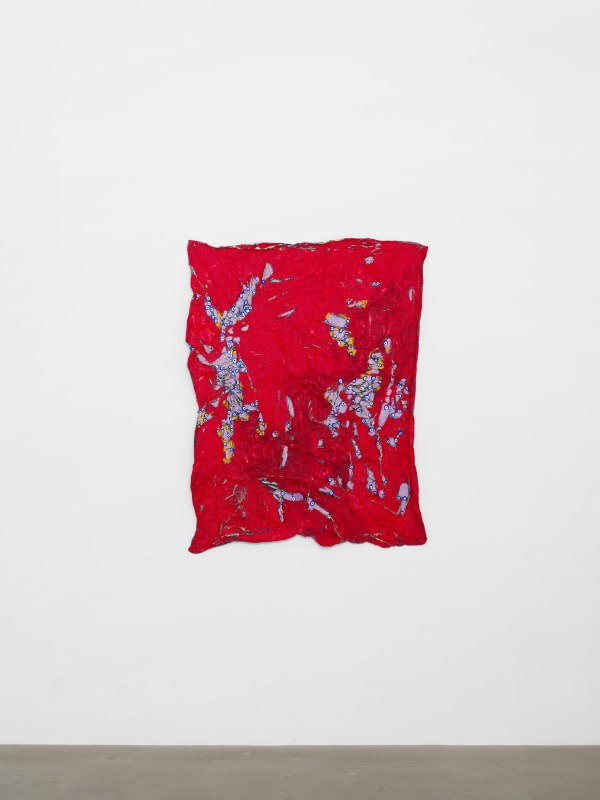
In Gianfranco Rosi’s documentary, Pompeii, Sotto le nuvole, an archaeologist is seen handling an ivory statuette of Lakshmi, the Hindu goddess of love and fertility. The Pompeii Lakshmi, since its discovery in 1938, has provided evidence for long-distance trade routes connecting the Roman Empire and India. Scholars have also speculated that the iconographic differences from typical depictions of Lakshmi as well as her resemblance to Venus may signal a syncretic depiction, an amalgamation of the two goddesses presiding over similar domains. One imagines the same roads that mark the point of convergence for N.H. and the Gradiva as having borne witness to the passage of the Lakshmi statuette. Like the Gradiva, who binds together the past and the future in the dream and who is encountered at the intersection in Pompeii that is somewhere at the threshold of them all, the Lakshmi statuette is inflected through the syncretic depiction of Venus-Lakshmi, a symbol of the mother-deity combining the iconography of different cultures. She is the intersection and the land itself, the red mineral-rich volcanic soil of Pompeii that replenishes life after disaster. Hélène Cixous: “Ce rouge est le sang de ma mémoire. Ma mémoire est un placenta. C’est la terre rouge qui nourrit mon avenir.” The red earth is the blood of my memory, a placenta that nourishes my future.
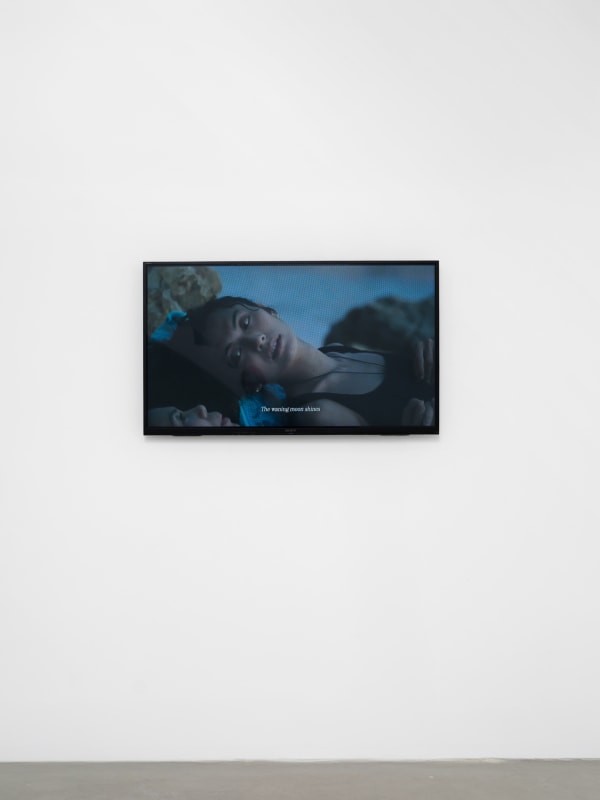
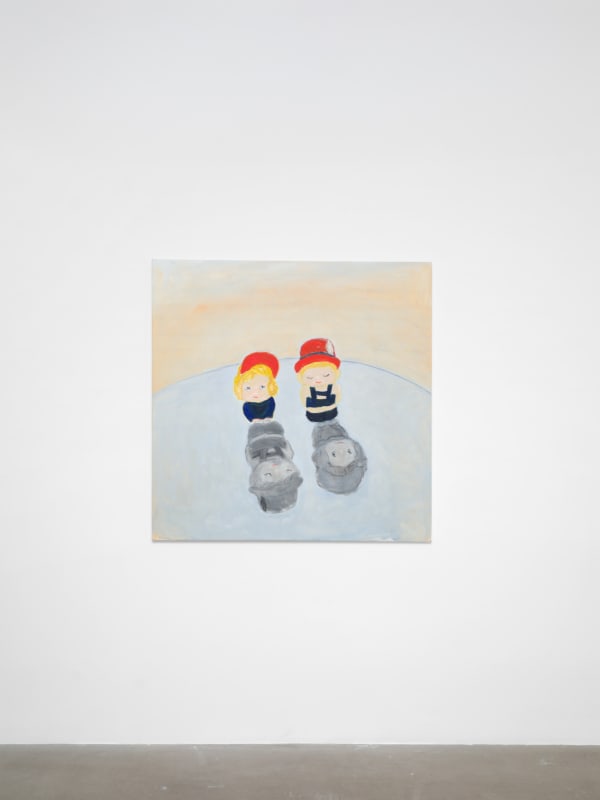
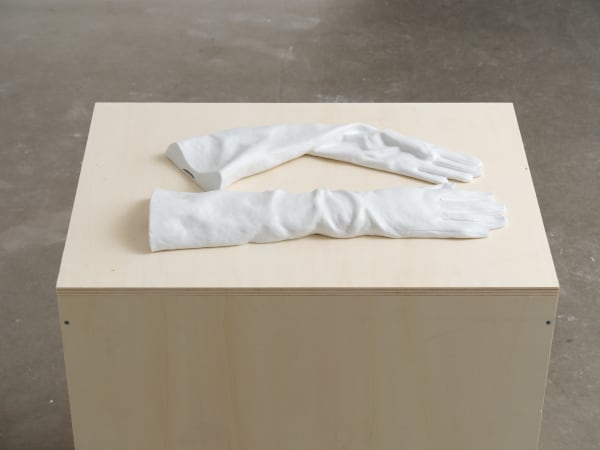
In Le Troisième Corps, Cixous responds to Freud’s interpretation of Jensen’s Gradiva, on the snowballing series of critical interventions inspired by the bas-relief of the Gradiva, who is splendidly ordinary in her walking. Cixous writes the mother into the story, writes her own mother: “My mother has an important name. The name is Eve. My mother is still living. She is primordial, she is unforgettable… In the Gradiva, the mother isn’t spoken of: mothers are forgotten, perhaps never existed.” Where had she walked thus and whither was she going? Later: “Eve would say during that time: all roads lead to Rome. And Rome is all places desired. Thus: one has only to depart in order to arrive. One has only to live in order to die, one has only to die in order to fall in love and only to forget in order to start over.” In the Gradiva, the mother is primordial, unforgettable, though she is unmentioned, unnamed. She survives. She is the crossroads that connects all places desired, the very fabric of the world. She teaches love as a time-shattering thing, is the tether between past and future, between love and loss. The various works included in Genesis might be read within such a landscape, at such an intersection in Pompeii at which the image of the mother and the mother-deity is re-read and re-inscribed with meaning, and within the red earth itself which is the image of fertility, of the cycles of life and death and rebirth over generations and the fragile threads that bind time together. Any possible continuity belongs to life and death and to her, she who walks through the past and into the future.
Julian Dime


